
Indu Kalpa Dihingia
Associate Professor (Research)
Institute of Fundamental Physics and Quantum Technology & School of Physical Science and Technology, Ningbo University, China
Research
Currently, I am an Associate Professor (Research) at Ningbo University. My research focuses on understanding the physics of accretion flows, relativistic jets, and variability phenomena around black holes and other compact objects. By combining analytical theory, numerical simulations, and observational diagnostics, I investigate how matter behaves in the presence of strong gravitational fields and how these processes manifest themselves in astronomical observations.
My work spans both supermassive and stellar-mass black holes, with applications ranging from Event Horizon Telescope (EHT) observations and horizon-scale imaging to X-ray variability in compact-object systems. A major goal of my research is to bridge the gap between theoretical models and observations, enabling a deeper understanding of the physical mechanisms governing some of the most energetic phenomena in the Universe.
The research areas highlighted below represent several of my current interests and active projects. However, my scientific interests are not confined to these topics alone. As new observational facilities, computational techniques, and theoretical challenges emerge, I aim to continually expand my research horizons and explore new directions in high-energy astrophysics, black hole physics, and related areas of gravitational science.
1. GRMHD Simulations of Black Holes
General Relativistic Magnetohydrodynamics (GRMHD) has emerged as one of the most powerful tools for investigating the behavior of magnetized plasma in the strong-gravity environment surrounding black holes. By simultaneously accounting for the effects of magnetic fields, fluid dynamics, and Einstein's theory of General Relativity, GRMHD simulations provide a self-consistent framework for studying accretion flows, relativistic jet formation, and time-dependent variability near compact objects. These simulations have become indispensable for interpreting modern observations of black hole systems across a wide range of scales, from stellar-mass black holes in X-ray binaries to supermassive black holes residing in the centers of galaxies.
The applications of GRMHD simulations are broad and continually expanding. They play a central role in understanding horizon-scale images obtained by the Event Horizon Telescope (EHT), the launching and collimation of relativistic jets, high-energy emission from accreting black holes, quasi-periodic variability, and the coupling between accretion flows and large-scale magnetic fields. By connecting theoretical models with observational signatures, GRMHD simulations provide a crucial bridge between fundamental physics and modern multi-wavelength and time-domain astronomy.
For comprehensive reviews of GRMHD simulations and their astrophysical applications, see Gammie, McKinney & Tóth (2003), Mizuno (2022), and Dihingia & Fendt (2025).
Below are some research topics and projects that I have recently worked on using GRMHD simulations.
(a) Black Hole Imaging and EHT Science
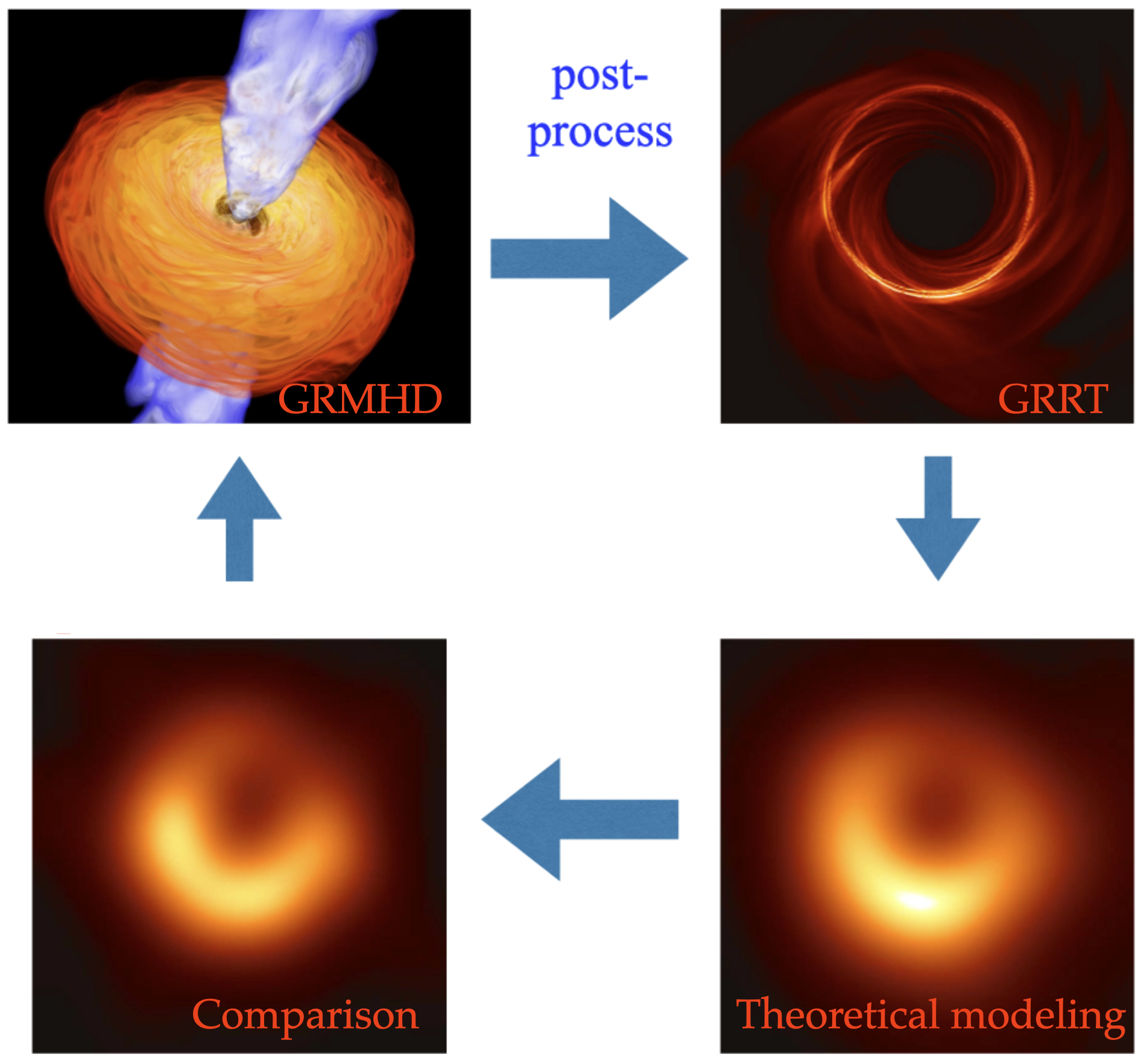
My research focuses on connecting horizon-scale observations of supermassive black holes with theoretical models of accretion and jet formation. Using GRMHD simulations coupled with general relativistic radiative transfer (GRRT) calculations, we generate synthetic black hole images that can be directly compared with observations from the Event Horizon Telescope (EHT).
A key goal is to determine how black hole spin, viewing inclination, and accretion-flow parameters influence observable image features such as the shadow, photon ring, and asymmetric crescent emission. By performing systematic parameter surveys and image-domain comparisons, we identify regions of model space that are consistent with EHT observations and quantify the constraints that current and future VLBI arrays can place on black hole physics.
We also investigate the imaging capabilities of next-generation EHT (ngEHT), Black Hole Explorer (BHEX), evaluating how improved angular resolution and array sensitivity can enhance tests of accretion models, black hole spin measurements, and strong-gravity predictions near the event horizon. Here are some selected publications Event Horizon Telescope Collaboration 2024, Event Horizon Telescope Collaboration 2025, Uniyal et al. 2026.
(b) Jet Formation and Magnetic Flux Evolution
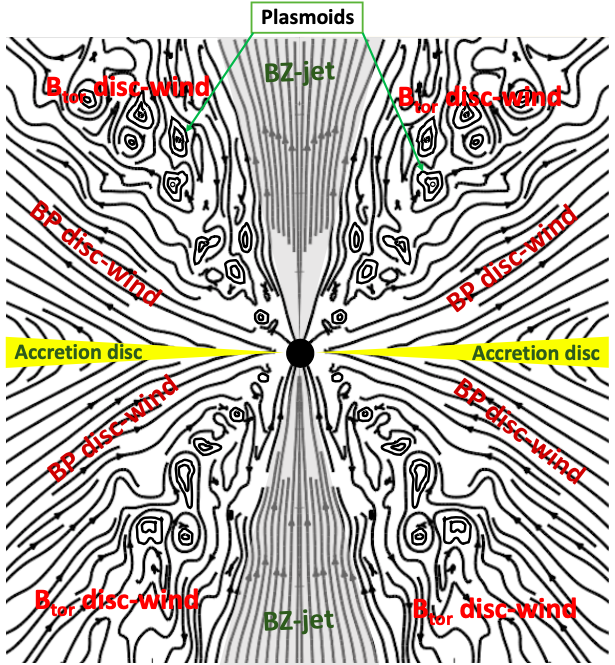
A key focus of my research is understanding how relativistic jets and disc-winds are launched from black hole accretion systems. Using state-of-the-art GRMHD simulations of thin accretion discs around Kerr black holes, I investigate the transition between different accretion regimes—from Standard And Normal Evolution (SANE) to Magnetically Arrested Disc (MAD)—and how this transition influences jet formation. Our simulations reveal that both the Blandford & Znajek (BZ) mechanism, which extracts rotational energy from the black hole itself, and the Blandford & Payne (BP) mechanism, which drives magneto-centrifugal winds from the accretion disc surface, operate simultaneously and their relative efficiency depends critically on the initial magnetic field strength and configuration.
We find that models with stronger and more inclined poloidal magnetic fields evolve toward a MAD state, where the accumulated magnetic flux near the black hole suppresses MRI-driven turbulence and instead promotes efficient BZ jet launching, achieving Lorentz factors up to γ ∼ 10. In these strongly magnetized regimes, the disc-wind is primarily driven by the BP mechanism via magneto-centrifugal acceleration. Conversely, weaker magnetic field configurations remain in SANE-like states where MRI-driven turbulence dominates, leading to toroidal magnetic pressure-dominated disc-winds. Our simulations also capture the formation of plasmoids through magnetic reconnection in current sheets near the black hole, which are advected outward and contribute to flaring activities and quasi-periodic oscillations in the jet mass flow rate. These results provide a unified framework for understanding the connection between accretion state transitions, jet launching efficiency, and observed variability in black hole X-ray binaries and AGN. For more details, see our comprehensive study Dihingia, Vaidya & Fendt (2021, MNRAS, 505, 3596).
(c) Variability and Time-Domain Signatures
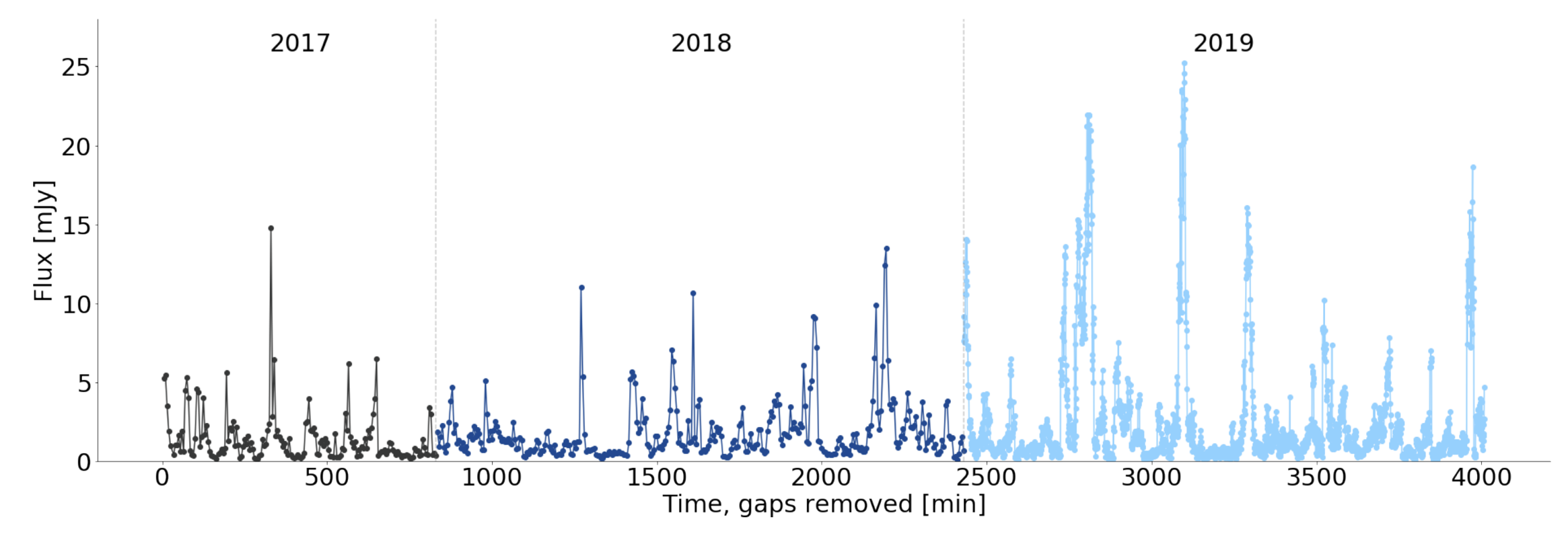
Time-domain variability is a powerful probe of accretion physics near black holes. Using long-duration GRMHD simulations of thin accretion disks interacting with injected low-angular-momentum matter, I have systematically studied how accretion flow properties evolve over time and how they manifest in variability signatures. Our simulations naturally reproduce the decaying phase of outbursts in black hole X-ray binaries, showing a continuous transition from the soft state → soft-intermediate state → hard-intermediate state → hard state → quiescent state, exactly as observed.
A key finding is the emergence of quasi-periodic oscillations (QPOs) in the accretion rate at various radii. We observe both low-frequency QPOs (~10 Hz for a 10 M☉ black hole) and high-frequency QPOs (~200 Hz), depending on the phase of evolution. The frequency of these oscillations correlates with the ratio of injected angular momentum to Keplerian angular momentum at the ISCO. When the accretion flow transitions to a low-angular-momentum torus configuration, the entire flow oscillates at the Keplerian frequency of the density maximum, producing coherent high-frequency QPOs. These results provide a theoretical framework for understanding the diverse QPO phenomena observed in BH-XRBs such as GRS 1915+105, XTE J1550-564, and GRO J1655-40.
This work also has implications for the "variability crisis" of Sagittarius A*—the supermassive black hole at the center of our Galaxy. Despite its low quiescent luminosity, Sgr A* exhibits significant infrared and X-ray flaring activity with a puzzling lack of periodicity. Our simulations suggest that variability in low-angular-momentum accretion flows may be inherently stochastic due to the interplay between injected material and the inner accretion flow. The observed QPOs in stellar-mass BHs scale to ~10⁻⁴–10⁻⁵ Hz for Sgr A*, below current observational sensitivity, potentially explaining why no coherent periodicity has been detected despite intense monitoring campaigns. Future instruments like the next-generation EHT (ngEHT) and high-cadence infrared telescopes may help resolve this puzzle. For details, see our comprehensive study Dihingia, Mizuno & Sharma (2023, ApJ, 958, 105).
(b) Imaging and Spectral Properties
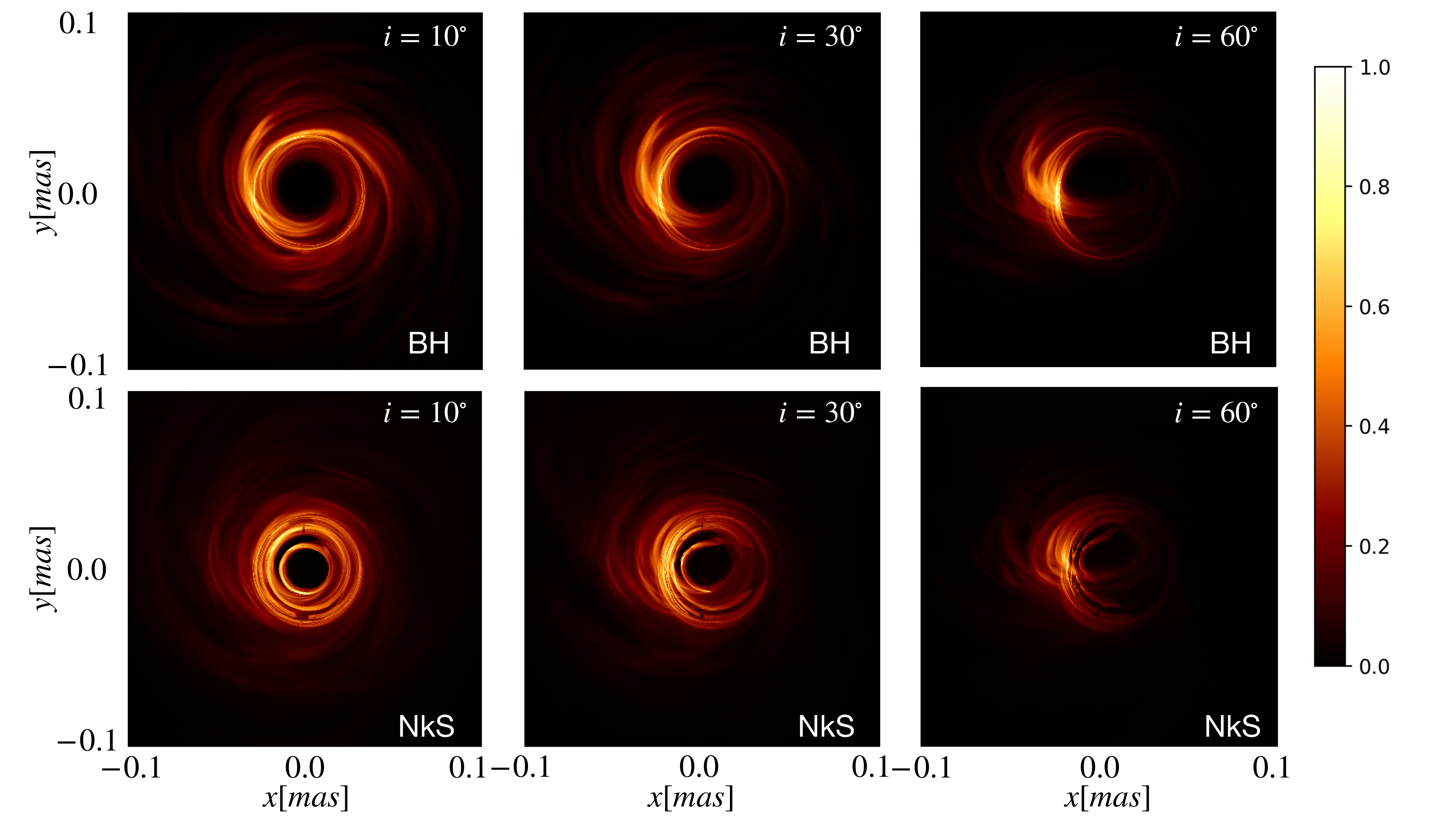
Why are imaging and spectral properties important? The Event Horizon Telescope (EHT) has opened a new window into strong-field gravity by capturing horizon-scale images of supermassive black holes M87* and Sgr A*. These images reveal a central shadow surrounded by a bright, asymmetric photon ring—a direct consequence of gravitational lensing and plasma emission in the extreme environment near the event horizon. However, these observational signatures depend critically on the nature of the central compact object. If exotic objects such as naked singularities (NKS) exist, they would cast distinctly different images and spectra, providing a unique opportunity to test the Kerr hypothesis and the cosmic censorship conjecture. Distinguishing between BHs and NKS through their electromagnetic appearance is therefore essential for validating our understanding of gravity in its most extreme regime.
In our recent work, we performed the first-ever GRRT calculations of horizon-scale images for an NKS using realistic fluid backgrounds from our GRMHD simulations. We modeled a "superspinars" type NKS (Kerr metric with spin parameter a* = 1.01) and compared its images with those of a rapidly rotating BH (a* = 0.9375). For both objects, we calculated synthetic 230 GHz images at inclinations of 10°, 30°, and 60°, assuming thermal synchrotron emission from the accreting plasma. The results reveal striking differences: while the BH produces a complete photon ring surrounding a central dark shadow—the hallmark feature of an event horizon—the NKS casts only a photon arc instead of a full ring. This arc-like structure arises because photons with prograde orbits spiral into the central singularity, while retrograde photons are lensed into an arc before reaching the inner boundary. Additionally, due to the presence of a zero-gravity surface near the NKS (where matter accumulates into a quasi-spherical density distribution), we observe multiple emission rings at lower inclinations—a feature uniquely associated with NKS.
These distinct imaging signatures provide a powerful observational discriminant between BHs and exotic horizonless objects. Current EHT observations of M87* and Sgr A* are broadly consistent with the Kerr BH paradigm, and recent studies have ruled out a large class of NKS solutions. Nevertheless, our work demonstrates that if future observations with next-generation EHT (ngEHT) and the Black Hole Explorer (BHEX) achieve sufficient angular resolution and dynamic range, they could definitively confirm or rule out the existence of NKS. For more details, see our comprehensive study Dihingia, Uniyal & Mizuno (2025, ApJ, 978, 44).
3. Low-Angular-Momentum Accretion
Hydrodynamic and magnetohydrodynamic studies of low-angular-momentum flows around black holes and exotic compact objects, relevant for wind-fed systems and certain classes of transients. I have worked on many topics in these directions. A few are explained here.
(a) Shock Formation and Survival
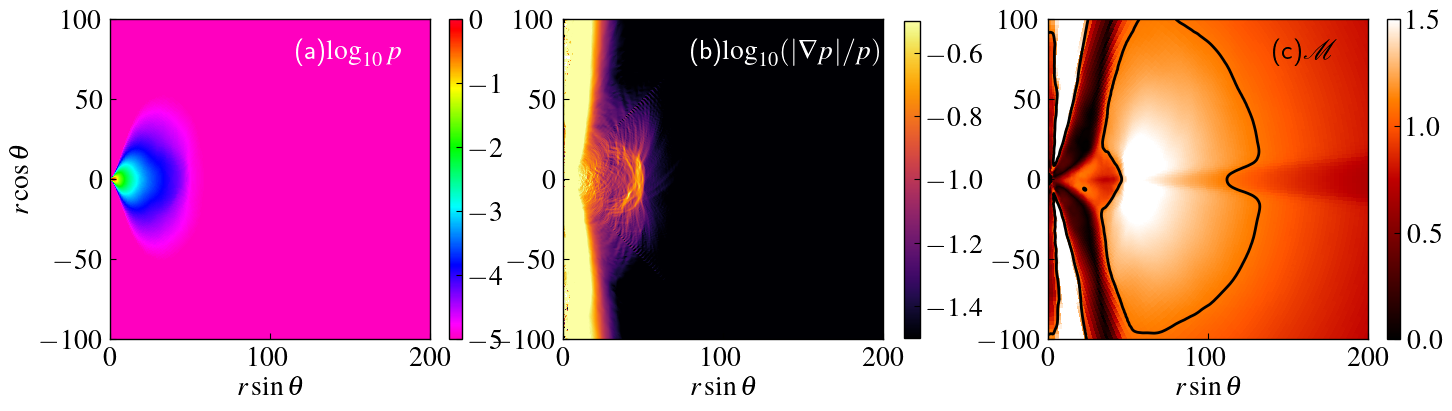
Why are shocks important? In black hole accretion systems, the high-energy X-ray and gamma-ray emission observed from the hot corona is thought to originate from shock-heated plasma very close to the event horizon. When low-angular-momentum, sub-Keplerian flows encounter the centrifugal barrier near the black hole, they can form standing or oscillating shock fronts. Across these shocks, the infalling gas undergoes sudden compression and heating, creating a localized jump in density and temperature—naturally giving rise to the hot, Comptonizing corona that dominates the high-energy emission. Understanding the conditions under which these shocks form and survive is therefore crucial for interpreting the nonthermal spectra of black hole X-ray binaries and active galactic nuclei.
Using high-resolution 2D GRHD and GRMHD simulations of low angular momentum accretion flows onto Kerr black holes, we have systematically investigated the formation and survival of global shock solutions. Our simulations demonstrate that for specific combinations of specific energy and angular momentum, global shock solutions naturally emerge between multiple sonic points. These shocks are sustained in both corotating and counterrotating accretion flows, and their locations depend sensitively on the specific energy, angular momentum, and black hole spin—in good agreement with semianalytical predictions. Importantly, we find that shock solutions exist only in the limit of highly super-Alfvénic flows (ℳa ≫ 1), where kinetic forces dominate over magnetic forces. Very weak magnetic fields (plasma-β ≥ 10⁵) do not significantly alter the shock structure. However, stronger magnetic fields (plasma-β ≤ 10²) suppress shock formation entirely, enhancing turbulence and driving powerful, magnetically dominated jets and outflows. The strength and structure of these outflows also depend on black hole spin, with higher prograde spins producing faster jets due to stronger gravitational compression and centrifugal forces. These findings provide a fundamental framework for understanding hot corona formation in low angular momentum accretion systems such as Sgr A* (which exhibits a weak jet/outflow) and X-ray binaries during their hard spectral states. For more details, see our comprehensive study Dihingia, Uniyal & Mizuno (2026, ApJ, 997, 277).
(b) Extreme Variability from Low-Angular-Momentum Accretion
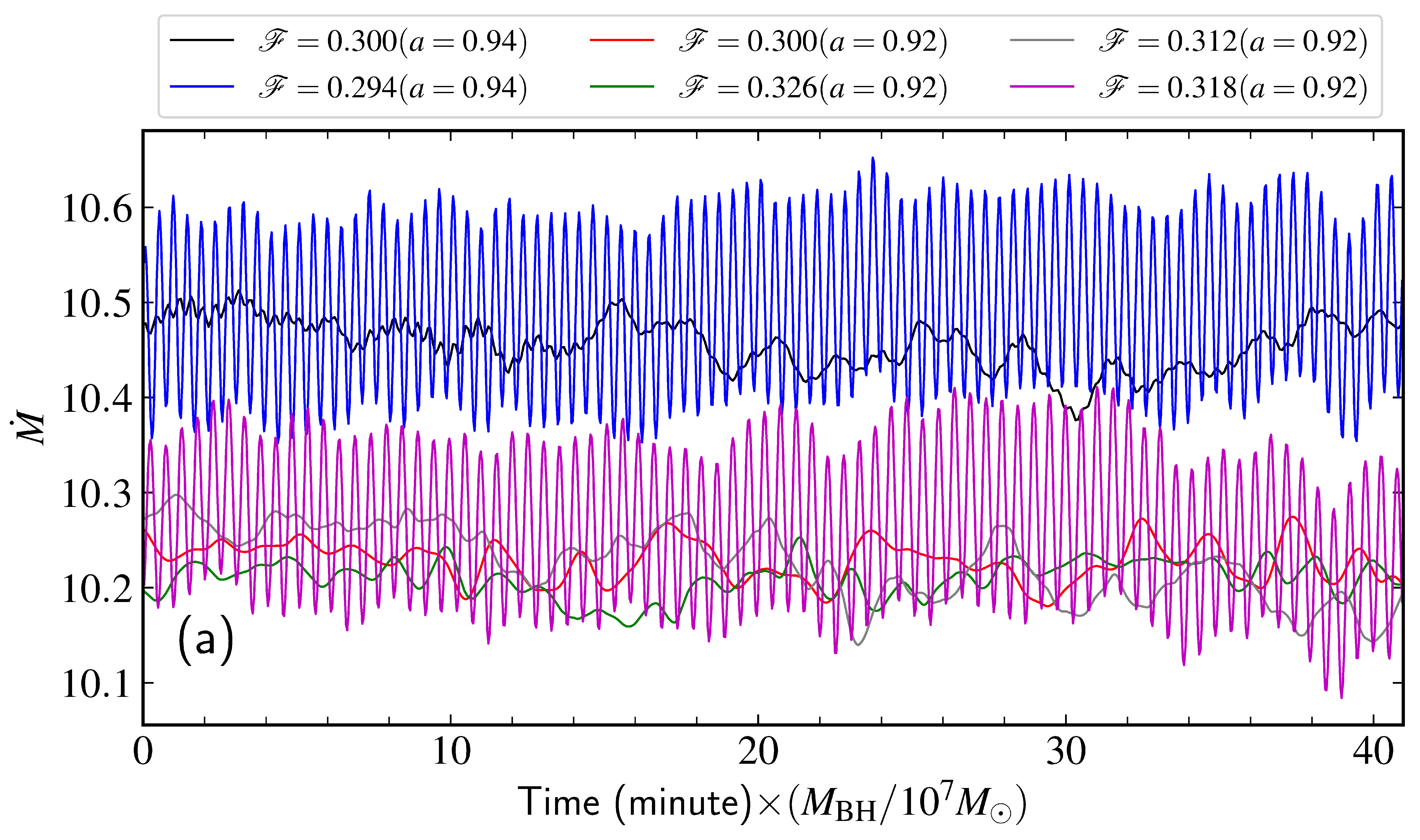
Why are extreme variabilities important? Supermassive black holes such as Sgr A*, RE J1034+396, 1H 0707-495, and 1ES 1927+654 exhibit intriguing quasiperiodic oscillations (QPOs) in their light curves on timescales of minutes to hours—corresponding to mHz to sub-mHz frequencies. When scaled by black hole mass, these frequencies are analogous to high-frequency QPOs (HFQPOs) observed in stellar-mass black hole X-ray binaries, suggesting a common physical origin tied to strong gravity. However, the mechanism producing such rapid variability has remained elusive for decades. In this work, for the first time, we demonstrate using 3D GRMHD simulations that low-angular-momentum accretion flows onto a rotating Kerr black hole can naturally produce coherent QPOs with frequencies reaching νQPO ≳ 0.1–1 × (10⁷ M☉/MBH) Hz—the cHz range for supermassive black holes. These oscillations emerge when the infall timescale of the radially dominated flow and the MRI growth timescale achieve a resonance condition, which occurs only in a narrow range of angular momentum values. The resulting power density spectra exhibit exceptionally sharp peaks with quality factors Q ≳ 200 and clear harmonic structure with a characteristic 2:1 frequency ratio. The physical origin of these oscillations is tied to the formation of a pseudo-surface—the boundary between inflowing and outflowing material near the black hole—which oscillates at the resonant frequency. Strikingly, while the total intensity (Stokes I) shows no detectable modulation due to gravitational redshift, the linearly polarized emission faithfully tracks the accretion rate oscillations, providing a clean observational signature. Our findings predict that low-angular-momentum accretion flows around SMBHs should exhibit cHz QPOs detectable in polarized light, offering a powerful new tool to probe strong gravity and test the presence of radially dominated accretion in sources like Sgr A* and 1ES 1927+654. For more details, see our Letter Dihingia & Mizuno (2025, ApJL, 982, L21).
(c) Astrophysical Applications of Low-Angular-Momentum Flows
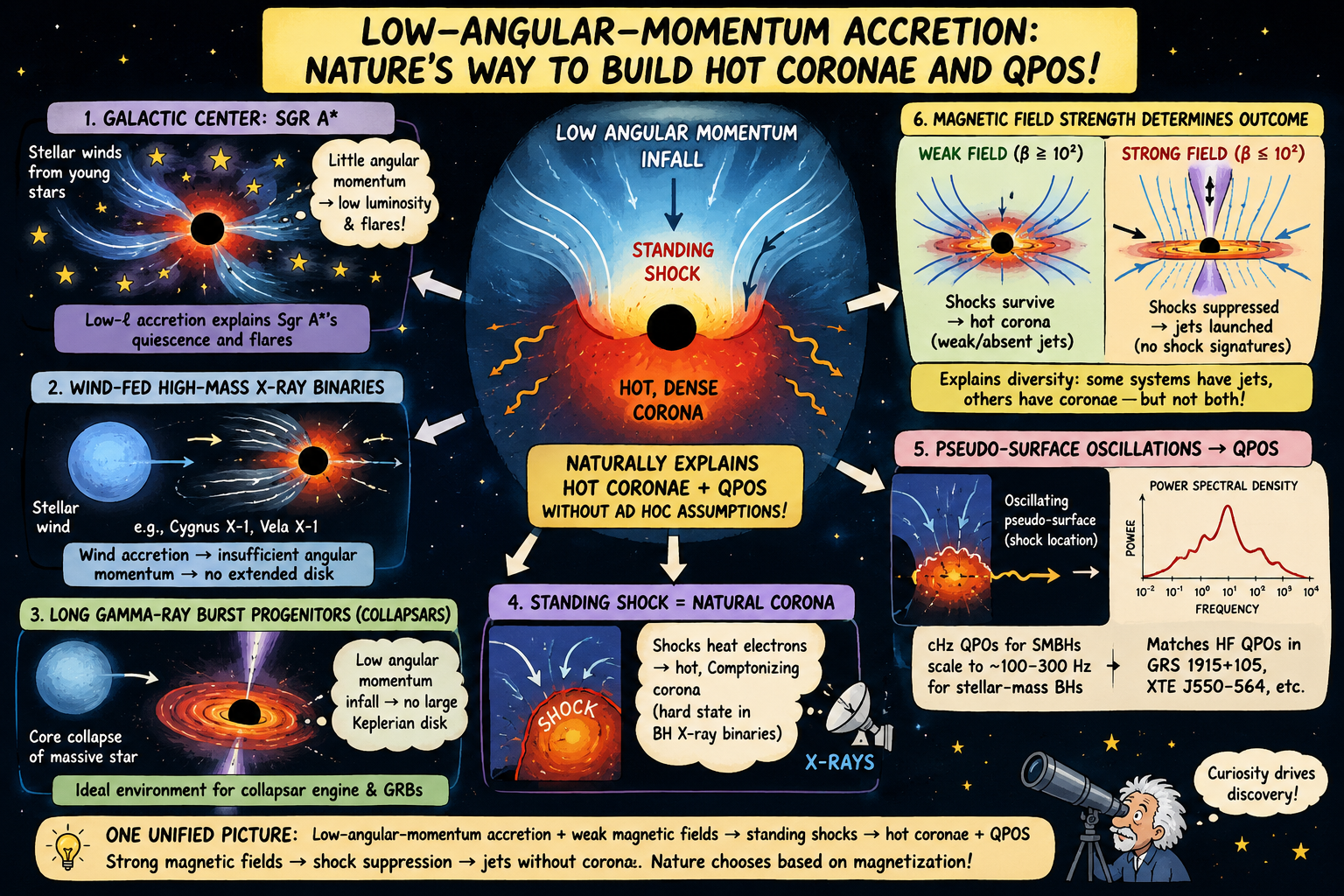
Low-angular-momentum accretion flows are not merely theoretical constructs—they are realized in several key astrophysical environments. The Galactic center source Sgr A* is a prime candidate, where stellar winds from surrounding young stars provide accretion with minimal angular momentum, naturally explaining its low quiescent luminosity and intermittent flaring activity. Similarly, wind-fed high-mass X-ray binaries (e.g., Cygnus X-1, Vela X-1) and the progenitors of long gamma-ray bursts (collapsars) involve accretion of material with insufficient angular momentum to form extended Keplerian disks. Our finding that standing shocks survive in weakly magnetized low-angular-momentum flows provides a natural explanation for the hot, Comptonizing corona observed in the hard state of black hole X-ray binaries—without invoking ad hoc coronal components. Furthermore, the pseudo-surface oscillations we discovered produce cHz QPOs for supermassive black holes (scaling to ~100-300 Hz for stellar-mass systems), matching the high-frequency QPOs observed in sources like GRS 1915+105 and XTE J1550-564. Finally, the systematic suppression of shocks by strong magnetic fields (β ≤ 10²) may explain why some accreting systems exhibit powerful jets but no detectable shock signatures, while weakly magnetized systems show coronal emission without jets. For more details, see our full study Dihingia, Uniyal & Mizuno (2026, ApJ, 997, 277).
Collaborations
I collaborate with researchers at Event Horizon Telescope collaboration, Shanghai Jiao Tong University, IIT Guwahati, and other international institutions. Interested in collaboration? Feel free to reach out!